
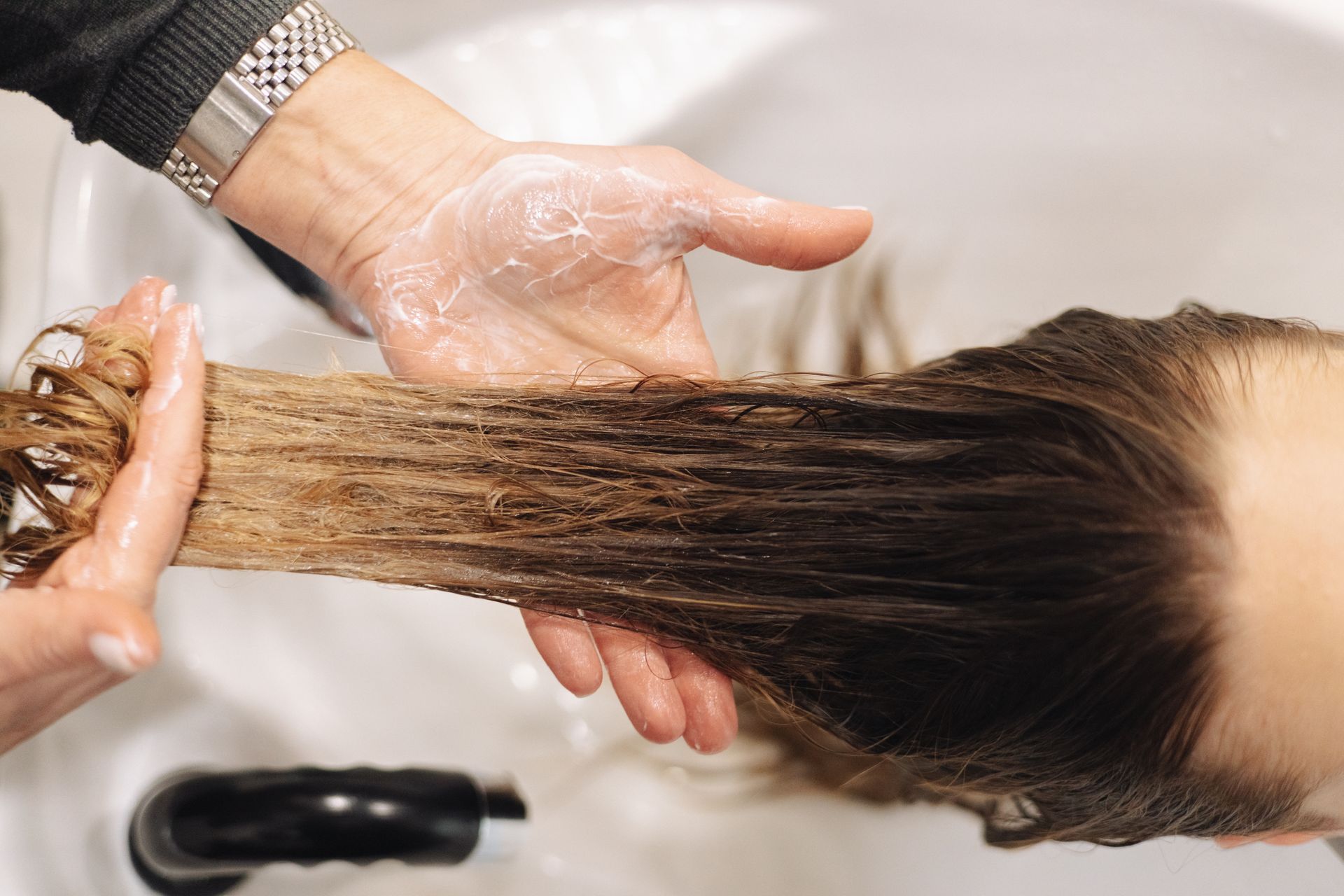
Nobody wants a scalp product that makes freshly washed hair look like it skipped two wash days. Yet that limp, greasy root is one of the fastest ways to lose a customer, even when the formula is doing its job.
A scalp serum that doesn’t weigh down roots relies on a low-residue base, dry and fast-spreading emollients, water-compatible conditioning agents, and a tightly controlled oil load. The goal is to deliver hydration and actives to the scalp while keeping the hair near the root clean, light, and full of movement.
Discover why leave-on formulas cause root heaviness, which hair care ingredients help prevent it, and how to test a formula before scale-up. Use it to build products that look as good on day two as they do on day one.
Why Leave-On Hair Care Products Weigh Down Roots
Leave-on hair care products weigh down roots when they deposit more material than the scalp and nearby hair can absorb. Unlike rinse-off formulas, every ingredient stays in place until the next wash. That makes oil load, film formation, and residue far more noticeable.
The scalp also produces sebum throughout the day. When a serum adds heavy oils or occlusive esters to that environment, the mixture migrates onto the first few centimeters of the hair shaft. The result is clumping, reduced volume, and a greasy look within hours.
Cationic conditioners can make the problem worse. High-substantivity quats perform well in rinse-off products, but in a leave-on format they can accumulate with each application. It is the same challenge formulators face when balancing shine and weight in conditioner formulas, only more pronounced because nothing gets rinsed away.
What Makes a Scalp Serum Feel Lightweight?
A scalp serum feels lightweight when its base dries quickly and its ingredients absorb, evaporate, or spread into a very thin film. Texture, drying time, and after-feel matter as much as efficacy, because consumers judge the product by how their roots look the next morning.
Starting With a Water-Based or Hydroalcoholic Base
Most lightweight hair products designed for the scalp use water-based, hydroalcoholic, or low-oil emulsion systems. These bases dry fast and leave less material behind. Humectant conditioners such as Phoenamid LMEA (Lactamide MEA) can contribute hydration in aqueous systems without adding an oil phase.
Ethanol speeds drying and gives a clean, fresh finish at the root. It also needs careful balancing, since high levels can leave a sensitive scalp feeling tight or dry. Many formulators pair a moderate alcohol content with humectants so the serum evaporates quickly but still leaves the skin comfortable.
Viscosity also shapes how a serum behaves after application. A thin, dropper-friendly liquid spreads evenly across the scalp, while a lightly thickened gel stays in place without running toward the hairline. Selecting the right viscosity modifiers lets formulators land between the two, building just enough body for control without adding drag or residue at the root.
Selecting Dry, Fast-Spreading Emollients
When a formula needs an oil phase, emollient choice decides whether it feels weightless or heavy. Dry, low-viscosity esters spread thin and absorb quickly. Heavier triglycerides and polyesters tend to linger on the hair shaft.
The Pelemol® emollient ester line includes Pelemol EA (Ethyl Arganate), an extremely dry ester with hair conditioning function, and Pelemol 899, a low-viscosity blend with a dry feel and light cushion. Used at modest levels, these esters help a non-greasy scalp treatment deliver emollience without visible residue.
Refractive index is another detail worth checking. Glossy, high-refractive-index oils add shine on the lengths, but at the root that same shine can read as grease. For scalp-focused products, esters with a matte or soft after-feel usually keep roots looking cleaner for longer.
Hair Serum Ingredients That Condition Without Residue
The most effective hair serum ingredients for scalp use deliver conditioning in a water-compatible form. That way, the benefit reaches the scalp and root area without leaving a heavy, oily layer behind.
Water-Compatible Silicones and Panthenol Copolymers
Conventional dimethicone fluids can coat fine hair quickly. Water-miscible silicone phosphates offer a different approach. At Phoenix Chemical, Pecosil® silicone ingredients include Pecosil SPP-50, a potassium dimethicone PEG-7 panthenyl phosphate that provides hydration, conditioning, and improved wet and dry combing.
Pecosil SO-9 is another option. It is a water-soluble moisturizing and conditioning emollient system, which makes it easier to work into clear, quick-drying serums than traditional silicone oils. These hair care ingredients pair silicone slip with a format that disperses readily in water.
Solubilizing Botanicals and Oil-Soluble Actives
Many scalp care formulation briefs call for botanical oils, fragrance, or oil-soluble actives. If these materials aren’t fully solubilized, they can separate in the bottle or leave an oily film on the scalp. Pelemol G7A (Glycereth-7 Triacetate), a water-soluble emollient, functions as a co-solvent or coupler that helps incorporate small amounts of esters into aqueous systems.
Getting the solubilizer level right takes some iteration. Too little causes haze or separation, while too much can leave the scalp feeling tacky.
Testing a Non-Greasy Scalp Treatment Before Scale-Up
Bench results only tell part of the story. A scalp treatment should be evaluated on hair tresses and in real-use panels to confirm it stays light after drying and across several days of repeat application. Useful checks include:
- Volume and clumping on fine hair tresses
- Drying time at the root
- Root appearance at 24 and 48 hours
- Stability through temperature cycling
- pH suited to both the scalp and the conditioning system
Change one variable at a time, such as ester level or conditioner concentration, so the source of any residue is easy to pinpoint. It also helps to repeat panels on thicker or coily hair to confirm the formula performs across your full target market.
Frequently Asked Questions
Can a scalp serum be formulated to stay crystal clear?
Yes, as long as oil-soluble materials are fully solubilized and the ingredients have closely matched refractive indices. Pelemol G45L (Glycereth-5 Lactate) works as a coupler in hydroalcoholic systems, helping the formula hold water while maintaining clarity.
Does the applicator affect how heavy a scalp serum feels?
Yes. Dropper and nozzle applicators place product directly on the scalp, while fine-mist sprays can deposit more product along the hair lengths.
Can a silicone-free scalp serum still have good slip?
Yes. Ester alternatives such as Pelemol D5R-V are designed to match the flow, spreadability, and softness of cyclopentasiloxane D5.
Building Leave-On Scalp Serums That Keep Roots Light
Root heaviness in leave-on hair care usually comes down to three factors, which are oil load, residue, and conditioner buildup. A water-base or low-oil base, dry esters, and water-compatible conditioning agents address each one. Careful solubilization and multi-day testing then confirm the result holds up in real use.
Scalp care has become a defining category in hair care, and consumers now expect visible results without sacrificing volume. Applying these principles helps every scalp serum you develop earn repeat purchases rather than complaints about greasy roots. Start by auditing your current oil phase, then swap in lighter hair serum ingredients where the formula feels heavy.
Since 1982, Phoenix Chemical has developed proprietary ingredients for the cosmetic, personal care, and OTC pharmaceutical industries from our research and development center in Branchburg, New Jersey. Whether you’re refining a non-greasy scalp treatment or launching a new line of lightweight hair products, contact our team to find the right ingredients for your next scalp care formulation.
